The Wall
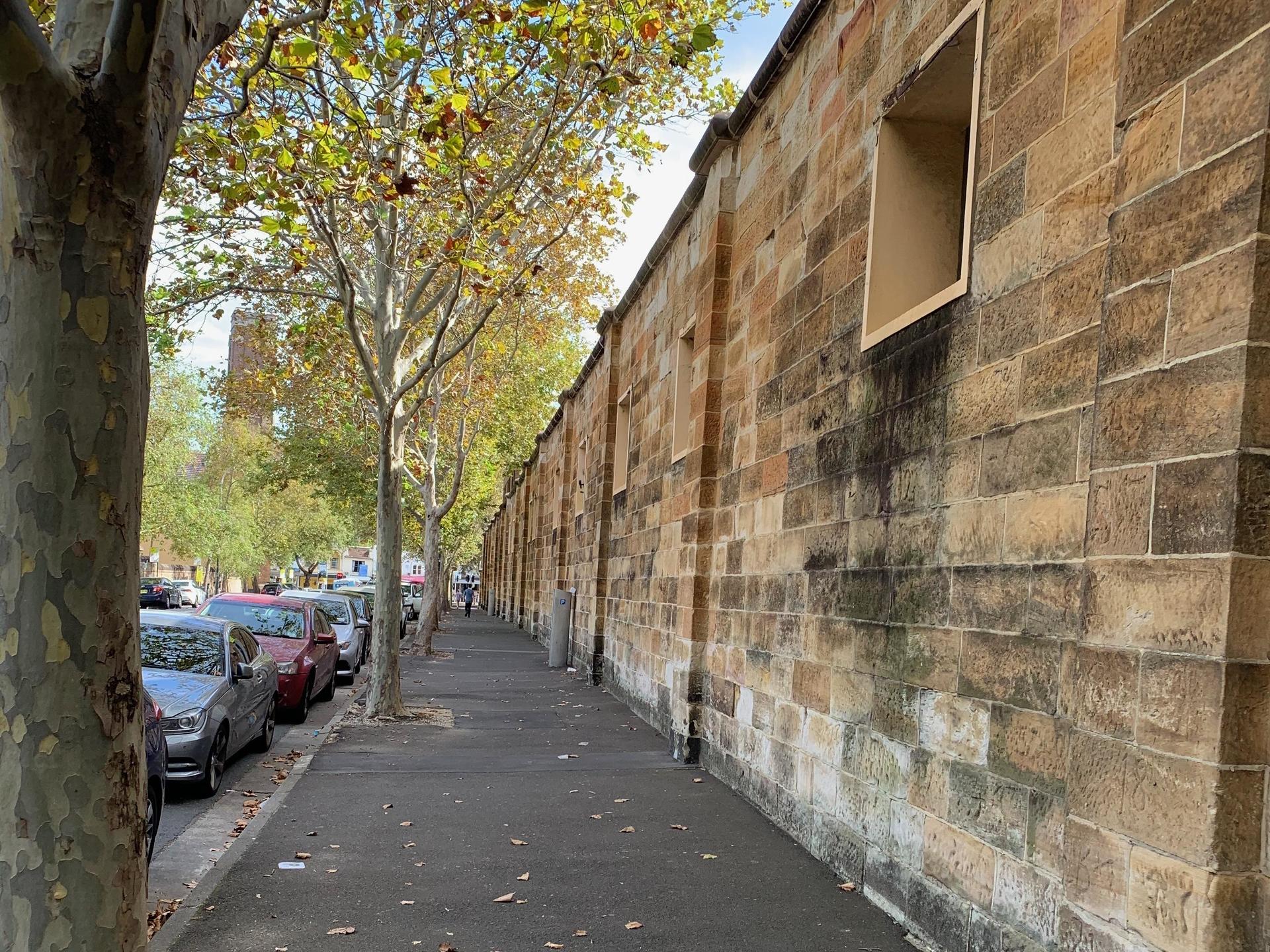
The old Darlinghurst Gaol wall, infamous through the '70s, '80s and '90s as a meeting point for male sex workers, many of them young, vulnerable and often homeless.
Walk up from Taylor Square and the footpath runs beside a long face of honey-coloured sandstone. It's the outer wall of the old gaol, now the National Art School. Look up and you'll spot the marks convicts chiselled into the blocks in the 1820s so overseers could check each man had done his share.
For decades, the stretch between Oxford and Burton streets was The Wall, Sydney's best-known strip for male sex work. Young men, many of them runaways and some still in their teens, walked its length after dark or leaned against the stone as cars slowed at the kerb. Sex between men was illegal in NSW until 1984, and the police station sat just around the corner. It was a dangerous way to survive, but for kids with few other options it was also somewhere to earn and to find others in the same boat. While the street saw its share of danger and stigma, it also bore witness to solidarity and subculture—where queer identity and survival were forged night after night under flickering streetlights.
From The Wall to the AIDS Ward
As the AIDS crisis hit Sydney in the 1980s, The Wall's community was devastated. Many of the rent boys who once leaned against that cold stone found themselves down the street in St Vincent's Hospital, often in the final stages of illness. The hospital, where Australia's first AIDS case was diagnosed in 1982, became known for caring for them with a compassion much of the city withheld.
Location
Darlinghurst Road, Darlinghurst, NSW, 2010


© 2026 Apollo Social