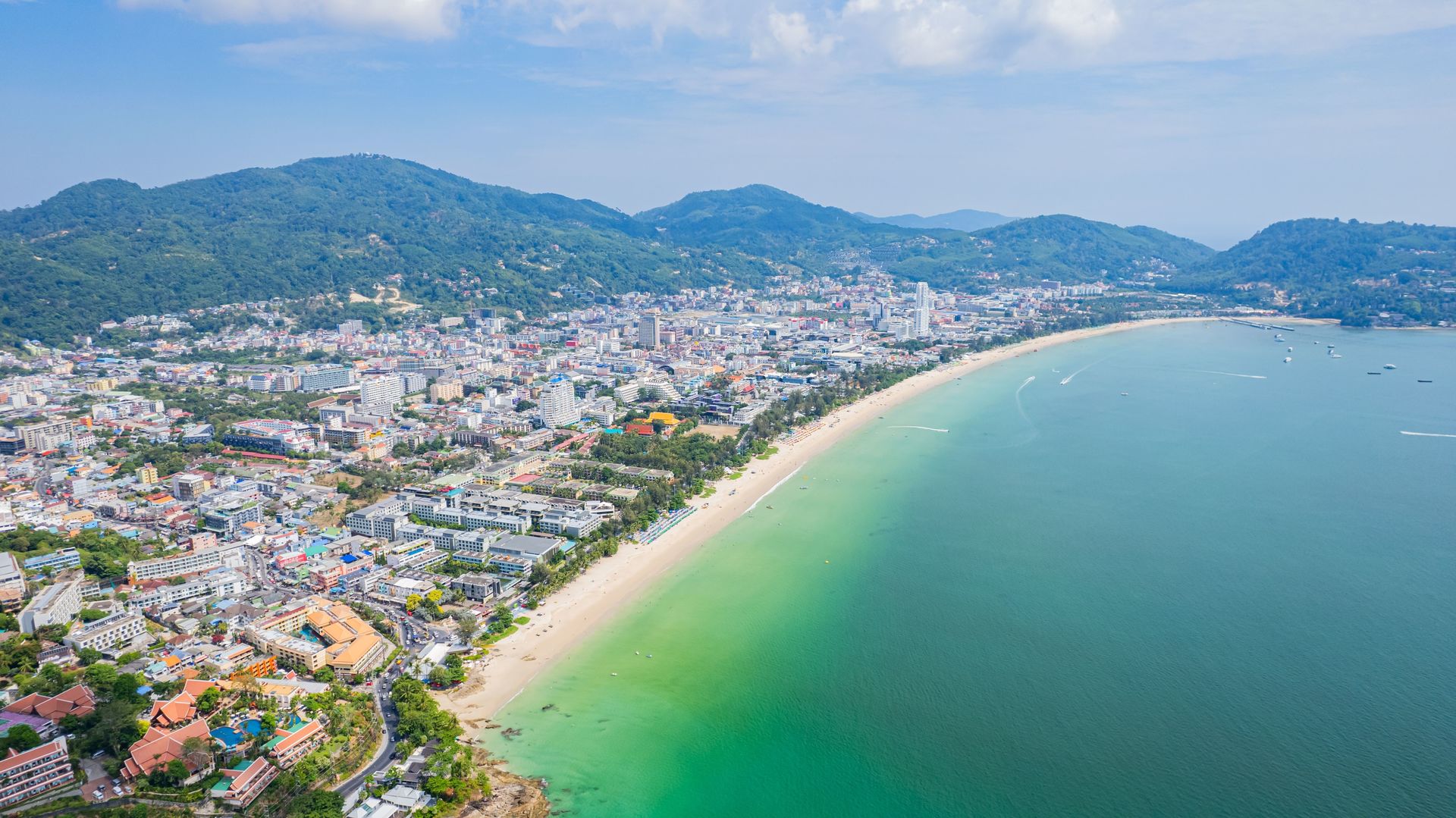
Phuket is that tropical friend who insists you cancel your plans, throw your phone on airplane mode, and come get lost between jungle hills, turquoise bays, and neon-lit nights that never quite know when to end.
On the surface, Phuket is all about the Andaman shimmer: long, swooping beaches, hills draped in jungle, and sunsets that look suspiciously like a colour filter. Life moves in a lazy loop of beach–eat–nap–repeat, but the island is never fully asleep; motorbikes hum past noodle stalls, longtail boats clatter out to sea, and the air carries that warm mix of salt, incense, and sizzling garlic.
Each pocket of the island has its own personality. Patong is the loud, glittery extrovert, all LED lights, market chaos and nightlife spilling out onto the pavement. Further south and east, places like Kata and Rawai slow the tempo with surfer bars, cosy beach clubs and a more lived-in, local feel. Phuket Town, with its pastel Sino‑Portuguese shophouses, indie cafés and street art, feels like a separate universe entirely – creative, historic, and surprisingly cool after dark.
Queer visibility is woven into the island’s nightlife rather than hidden in the shadows. Patong’s Paradise Complex – a compact little maze of bars, drag stages and dance floors – has been the island’s unofficial rainbow HQ for years, where holidaymakers, expats and locals share the same streets and the same hangovers. Daylight softens everything; you’ll find mixed crowds on Patong’s sand, couples wandering Phuket Old Town hand in hand, and a general sense that you’re more than welcome to bring your full self to the party.
Long before beach clubs and rooftop pools, Phuket was a busy trading stop on the route between India and China, dealing in tin, spices and, occasionally, pirates. The island’s blend of Thai, Chinese, Malay and European influences still shows up in its food, temples and the candy‑coloured shophouses of Phuket Old Town.