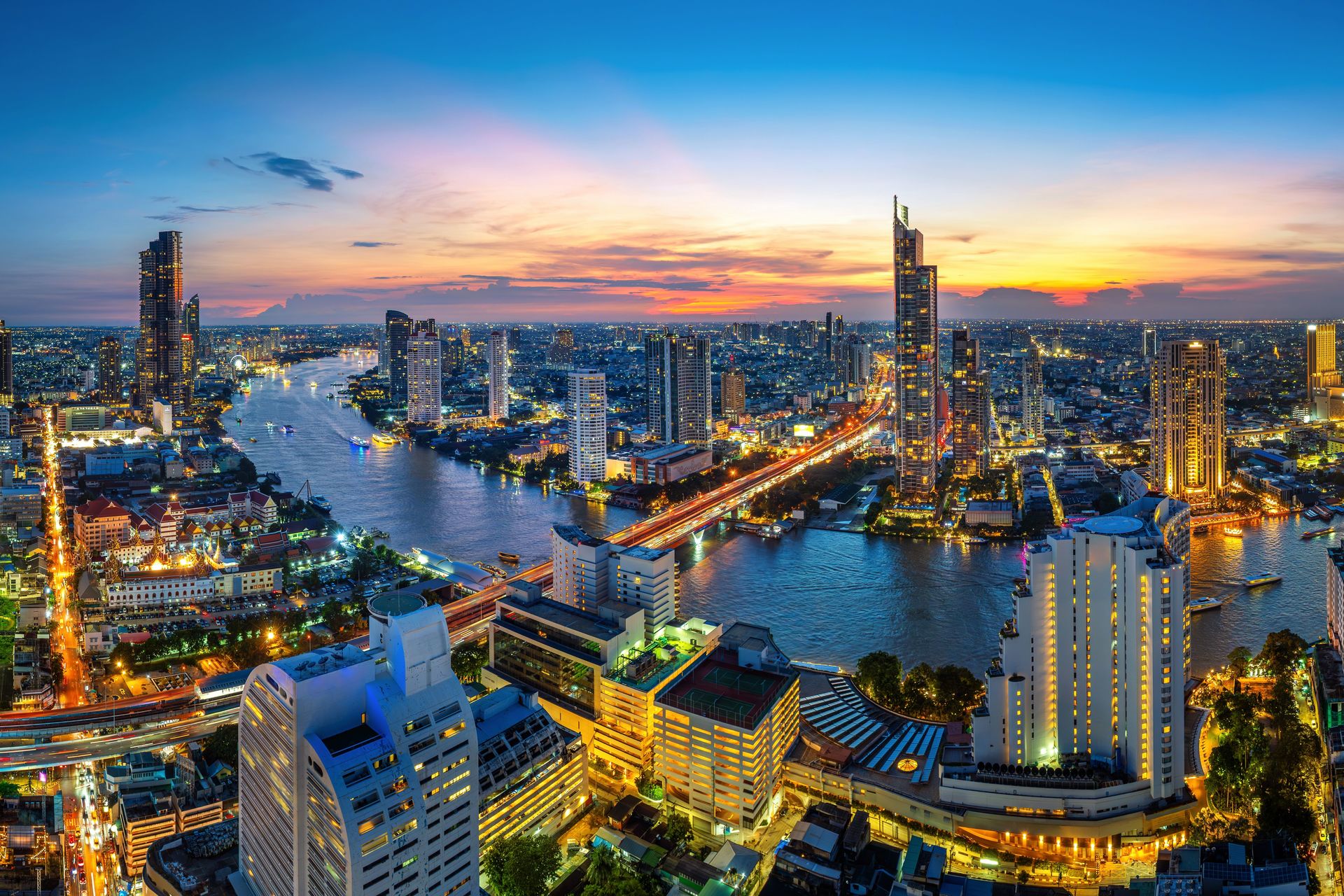
Bangkok doesn’t ease you in; it sweeps you up. Heat rising from temple roofs, neon bouncing off the river, street food smoke curling around you – the city hums like it’s always 11pm and your night is just getting started.
This is a city of glorious contradictions. Monks glide past glassy malls, shrines glow under skytrains, and rooftop bars look down on alleyway kitchens serving the best bowl of noodles you’ll ever drunkenly confess your secrets to. The pace is intense but strangely soft at the edges: chaotic traffic, slow smiles, and a deep, everyday spirituality that somehow makes the whole circus feel grounded.
Downtown, Sukhumvit and Silom stack worlds on top of each other – office towers, hidden speakeasies, glossy malls, and late-night haunts where the dress code is basically "be interesting." Thong Lo and Ekkamai lean into their hipster era with design hotels, tiny cocktail labs, and cafés where everyone looks like they have an art side project. Hop over the river to Thonburi for canals, quiet temples, and wooden houses that feel like a different century – until someone pulls out a smartphone for a selfie.
Bangkok’s nightlife is famously extra, but it’s also disarmingly welcoming. From rowdy beer towers and go-go lights to chic, queer-friendly cocktail bars and intimate drag stages, there’s a sense that nobody is shocked by much and curiosity is practically civic duty. Underneath the neon, there’s a long, complicated story of gender diversity and fluidity woven into Thai culture – which is why you’ll often feel more seen here than in cities that make bigger promises on paper. Come for the food and the skyline; stay because the city keeps winking at you, like it knows exactly why you really booked that flight.
Bangkok’s full ceremonial name is over 150 characters long and loosely translates to a "City of Angels" with enough poetic extras to fill a novella. The short version stuck, but that grand, maximalist name explains a lot about the city’s personality: nothing is ever done halfway.
While today’s bars and cabarets get the spotlight, Thailand’s history includes longstanding cultural space for gender diversity, from kathoey (often translated as trans women or third-gender people) in folklore and performance to modern activists pushing for legal recognition. Bangkok sits at that crossroads of tradition, visibility, and ongoing struggle.
Bangkok’s BTS skytrain may be the symbol of its modern hustle, but the Chao Phraya River was the city’s original highway. One of the best low-effort thrills is riding a local river boat at sunset – temple spires, luxury hotels, and wooden houses all sliding past in the same frame.
Bangkok has one of the largest and most established gay scenes in Asia, centred around the compact streets of Silom, the city’s financial district by day and nightlife hub after dark. Most gay bars cluster along Silom Soi 4, a short pedestrian lane where open-air terraces fill nightly with a friendly mix of locals and international travellers. Around the corner on Silom Soi 2, larger dance clubs attract late-night crowds and weekend partygoers. Beyond Silom, Bangkok’s queer scene also includes drag bars, saunas, spas and occasional dance parties across the city, creating a nightlife culture that is social, energetic and remarkably easy for visitors to navigate.
G Bangkok (GOD) is the city’s classic after-hours sanctuary: lights low, bass high, and a dancefloor that only really wakes up once most of Silom has gone to bed.
Ratchada’s Fake Club is Bangkok turned up to eleven: a cavernous, neon-drenched gay mega-club where Thai pop anthems, drag spectacles and boy dancers collide until very late.
Bangkok is a city of striking contrasts where centuries-old traditions sit comfortably alongside modern urban energy. Golden temple spires rise above busy streets, monks pass quietly through morning markets, and longtail boats glide along canals that once served as the city’s main transport network. At the same time, Bangkok is unmistakably contemporary, with sleek shopping malls, rooftop cocktail bars and a nightlife scene that rarely slows before sunrise. This mix of historic culture and fast-moving city life gives the city an atmosphere that feels both deeply rooted and constantly evolving.
Equally memorable is the warmth of the people who live here. Thai culture places a strong emphasis on kindness, hospitality and social harmony, and visitors often notice how gentle and welcoming everyday interactions can feel. Thailand has also long recognised forms of gender diversity, often referred to as a “third gender,” which helps explain the country’s generally relaxed attitude toward LGBTQ+ people. While Bangkok is a huge and complex city, many queer travellers find it to be a place where they can move through restaurants, markets, temples and nightlife venues with a comfortable sense of openness and acceptance.
10+ million
Thai Baht (THB)
Thai (English widely spoken in tourist areas)
Suvarnabhumi International Airport (BKK)
Bangkok Pride (June)
The most comfortable time to visit Bangkok is during the cooler, drier season from November to February, when temperatures are slightly lower and humidity drops, making it easier to explore the city’s markets, temples and neighbourhood streets. March to May brings hotter weather, while the rainy season from June to October sees frequent but usually short tropical downpours that often clear quickly. Bangkok is lively year-round, but timing a visit around major celebrations such as Songkran in April, Thailand’s famous water festival, or Pride events in June can add an extra layer of energy to a trip.