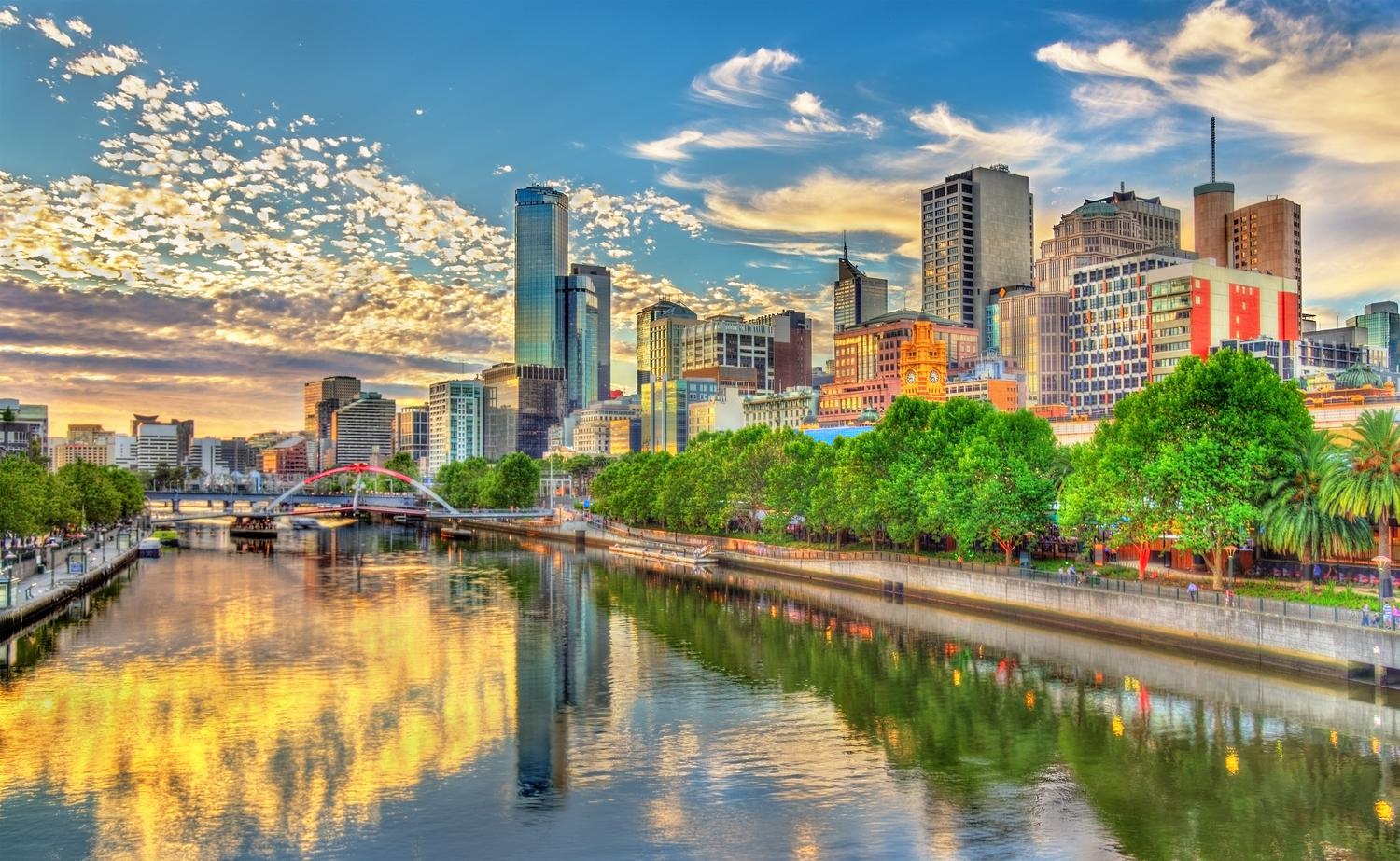

Melbourne
A cosmopolitan and dynamic city, Melbourne exudes style in everything it does. With its thriving food, art and culture scenes and a buzzing nightlife, Melbourne never ceases to impress.
Melbourne is built on a grand scale with tree-lined boulevards and impressive Victorian-era buildings. Stunning streetscapes seamlessly combine old-world charm with modern and quirky architecture and the city is wallpapered with striking street art. Every street and laneway is a feast for the eyes.
Yet Melbourne remains understated by keeping its best parts hidden in nondescript laneways. It invites exploration and adventure and ensures there is always something new to discover.
While there is no centralisd gay village, there are plenty of queer bars and clubs and the city has a thriving and innovative queer dance party scene, with many dance parties starting in Melbourne and being exported around the country.
This, combined with the city’s strong liberal and progressive values, have always been a drawcard for queer people and ensure the city has a well-developed gay culture.
The land on which Melbourne was built was inhabited for over 40,000 years by the Bunurong Boon Wurrung and Wurundjeri Woi Wurrung peoples of the Eastern Kulin Nation. [6] The area has always been an important meeting place for the 5 nations that make up the Kulin nation alliance who inhabited south central Victoria. The Aboriginal name “Naarm” is frequently used alongside the city’s European name as the two alternative names for the city.
Sydney tends to take all the limelight when it comes to international recognition, but Melbourne has just as much to offer and is expected to overtake Sydney as Australia’s largest city by 2030. [9]
Melbourne has such appeal that it has earned several enviable titles. It’s the world’s most livable city [10] (at least until Covid hit. No doubt it will return to the top spot once Covid is behind us). Its thriving arts and festival scene has earned it the title of Australia’s cultural capital. And its opulent Victorian-era architecture has earned its title of “marvellous Melbourne”. [8]
However you know it, Melbourne is an exceptional city and you can’t help but hope a little bit of it rubs off on you.
The township of Melbourne was founded on the northern bank of the Yarra River in 1835 based on reports of fertile land in the area. [7] The township was named after British Prime Minister William Lamb, 2nd Viscount Melbourne, whose seat was in Melbourne, Derbyshire. [7]
The discovery of gold in the region in 1851 cemented Melbourne’s future as a major city. The resulting gold rush caused the city’s population to increase exponentially and by 1890 it was the second-largest city in the British empire after London, and was one of the richest cities in the world. [8] This wealth brought a construction boom of grand Victorian-era buildings which give the city its charm today.
The discovery of gold in the region in 1851 cemented Melbourne’s future as a major city. The resulting gold rush caused the city’s population to increase exponentially and by 1890 it was the second-largest city in the British empire after London, and was one of the richest cities in the world. [8] This wealth brought a construction boom of grand Victorian-era buildings which give the city its charm today.
© 2026 Apollo Social